
Malcolm Smith: My Journey With Prostate Cancer
Why early checks matter, even if you feel fit, strong, and symptom-free
In April 2025, just weeks before The Gralloch, I was diagnosed with prostate cancer.
It came completely out of the blue. I felt fit, strong, and in the best shape of my life for my age. I had no symptoms. And yet, suddenly, I was facing a very different kind of challenge.
We have decided to share my experience openly, not for sympathy, but to raise awareness and help normalise conversations around prostate cancer. A significant proportion of our community falls into the age bracket where this is something we all need to be conscious of. If my story prompts even one person to get checked earlier than they otherwise would have, it will have been worth telling.
About Me
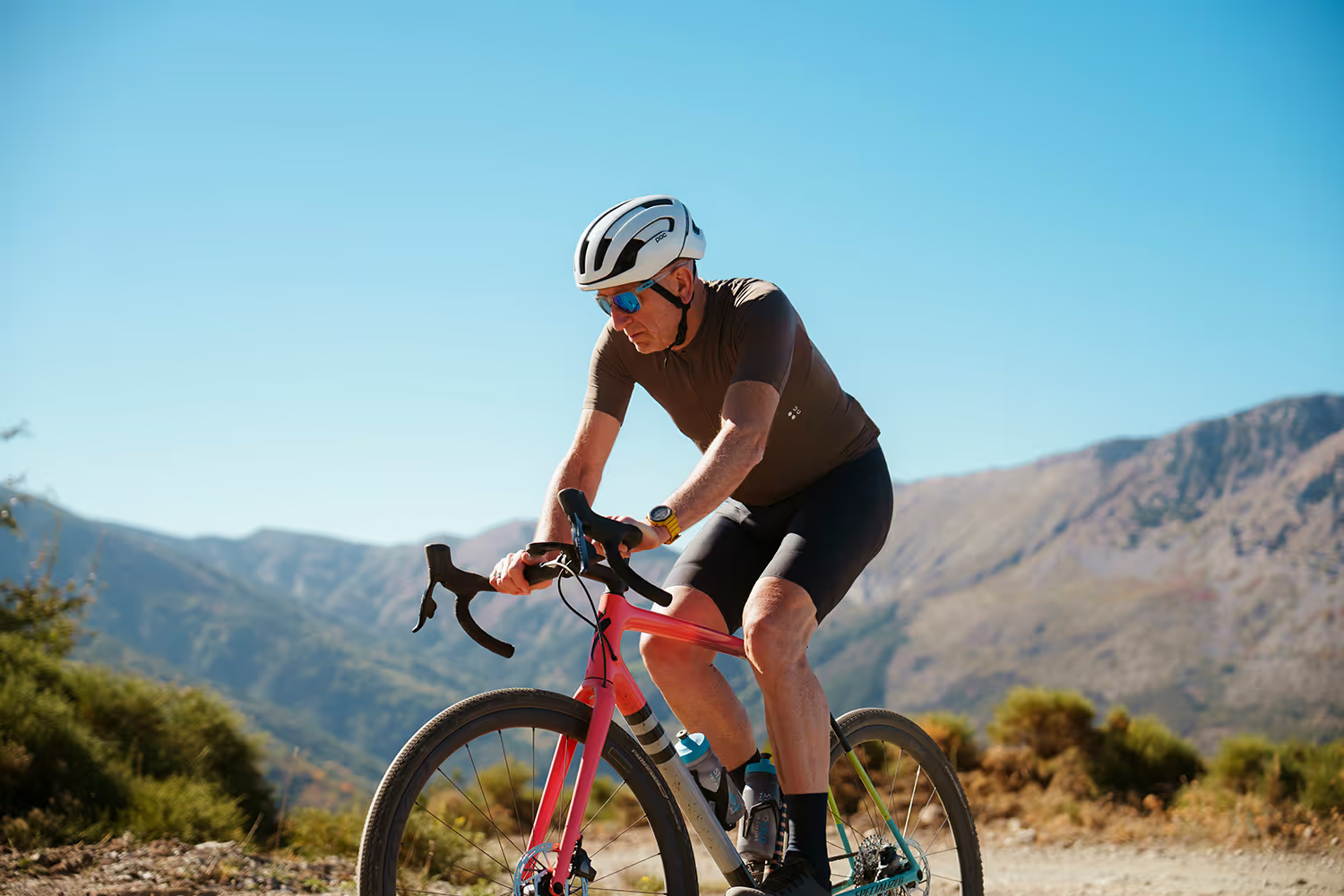
My name is Malcolm Smith. I am 61 years old and co-founded Red On Sports with Maximilian Wussler with the aim of creating gravel cycling events recognised among the best in the world. Events that deliver exceptional experiences in remarkable locations, and authentic platforms for brands to connect with an engaged audience.
At heart, I am a competitive cyclist. I have been since my early twenties, when a recurring ankle injury forced me to give up running. Career and family life tempered those ambitions for a while, but cycling never left me. In my forties I returned to racing more seriously, lost significant weight, and set progressively more ambitious goals. I eventually held a UK 1st Category road licence into my early fifties, something I was quietly proud of.
I mention this because I have always considered myself very aware of my body. I know what hard training feels like. I know when something is not right. That made what followed all the more unexpected.
Routine Checks, and a Shock
In my mid-forties I became aware, via a family conversation, that my father was undergoing radiotherapy. He never said what for, but I suspected prostate issues. We are not particularly close, but it was enough of a nudge for me to get checked.
Over the years I made a habit of regular prostate checks, including PSA blood tests, apart from a gap during Covid. Prior tests had always been reassuring. One showed a slightly elevated PSA, but I had been cycling hard beforehand, which can skew results, and follow-up checks showed nothing of concern.
In April 2025 I had another PSA blood test. Once again, I had been training hard, including a 25-mile time trial and long rides in the preceding days. I now know this is a definite no-no before PSA testing. Even so, the result came back high enough to trigger further investigation.
At the end of April, as preparations for The Gralloch ramped up, I was called in for a digital inspection (no need to explain how that goes!). This time, the prostate did not feel smooth. I was also told my PSA level was 21. Even allowing for cycling, that number was high.
That was the moment it became real, and frightening.
No Symptoms at All
What is particularly troubling about prostate cancer is how silent it can be.
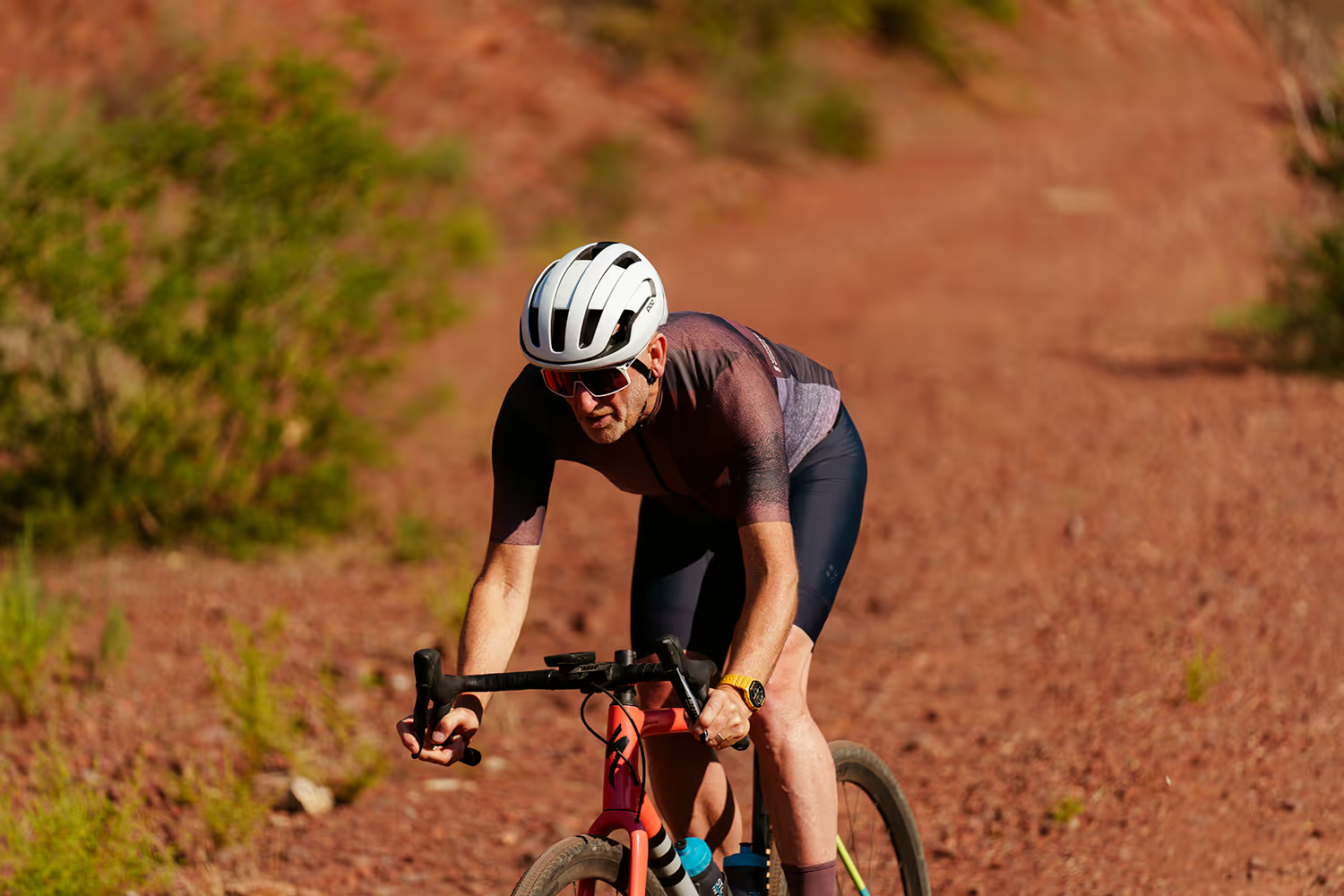
I had none of the commonly cited early symptoms. No weak urine flow. No frequent night-time trips to the bathroom. No pain. I felt entirely normal. I had been racing just weeks earlier.
I have since learned that prostate cancer is often referred to as a “silent killer” for exactly this reason. Feeling fit does not mean you are not at risk.
Diagnosis, Biopsy, and The Gralloch
I underwent a biopsy shortly before The Gralloch. It was not pleasant, but it was manageable, and the professionalism of the NHS urology teams made it far less daunting than it could have been.
When the results came back, my wife Lindsay came with me, something I had not thought necessary, but which I was hugely grateful for. The moment you hear the word “cancer”, the world tilts slightly. Most of the biopsy samples showed cancer, but the key message was that it appeared treatable.
Further scans were needed to confirm whether it had spread.
Then, almost immediately, we headed north for The Gralloch.
In many ways, the event was a blessing. The intensity, focus, and teamwork carried me through those weeks. I told a small number of close colleagues and partners what was happening, and several later told me they had booked checks themselves as a result. Some have since let me know their tests came back clear, news that meant more to me than they will probably realise.
Scans, Uncertainty, and the NHS
After The Gralloch, the scans came thick and fast, including CT, MRI, and eventually a PET scan when initial results were inconclusive. Each step brought a new wave of uncertainty.
Throughout it all, the NHS was extraordinary. The speed, clarity, and compassion of the system, particularly at Peterborough City Hospital, were remarkable. My care was overseen by Miss Jyota Shah, a pioneering urology consultant with a deep commitment to early detection.
There is a lot of criticism aimed at the NHS. My experience was the opposite. We are incredibly fortunate to have it.
The Big Result
In early June, I attended an appointment knowing I would finally be told whether the cancer had spread. That morning was one of the hardest of the entire journey.
The news felt like I had dodged a bullet.
The cancer appeared to be contained within the prostate. Treatable. A future I could plan for again.
From there, three milestones lay ahead:
- Choosing a treatment
- Undergoing it
- Confirming its success
Choosing Treatment
I was offered two options, radiotherapy or surgery.
Radiotherapy was less invasive initially, but would have involved daily hospital visits for months and a long hormone treatment programme, with significant impacts on energy, cognition, and body composition.
Surgery carried its own risks, including incontinence and sexual side effects, but offered a clearer and faster route back to the active life I still wanted to live.
Given my personal circumstances, surgery was the obvious choice.
Surgery and Recovery
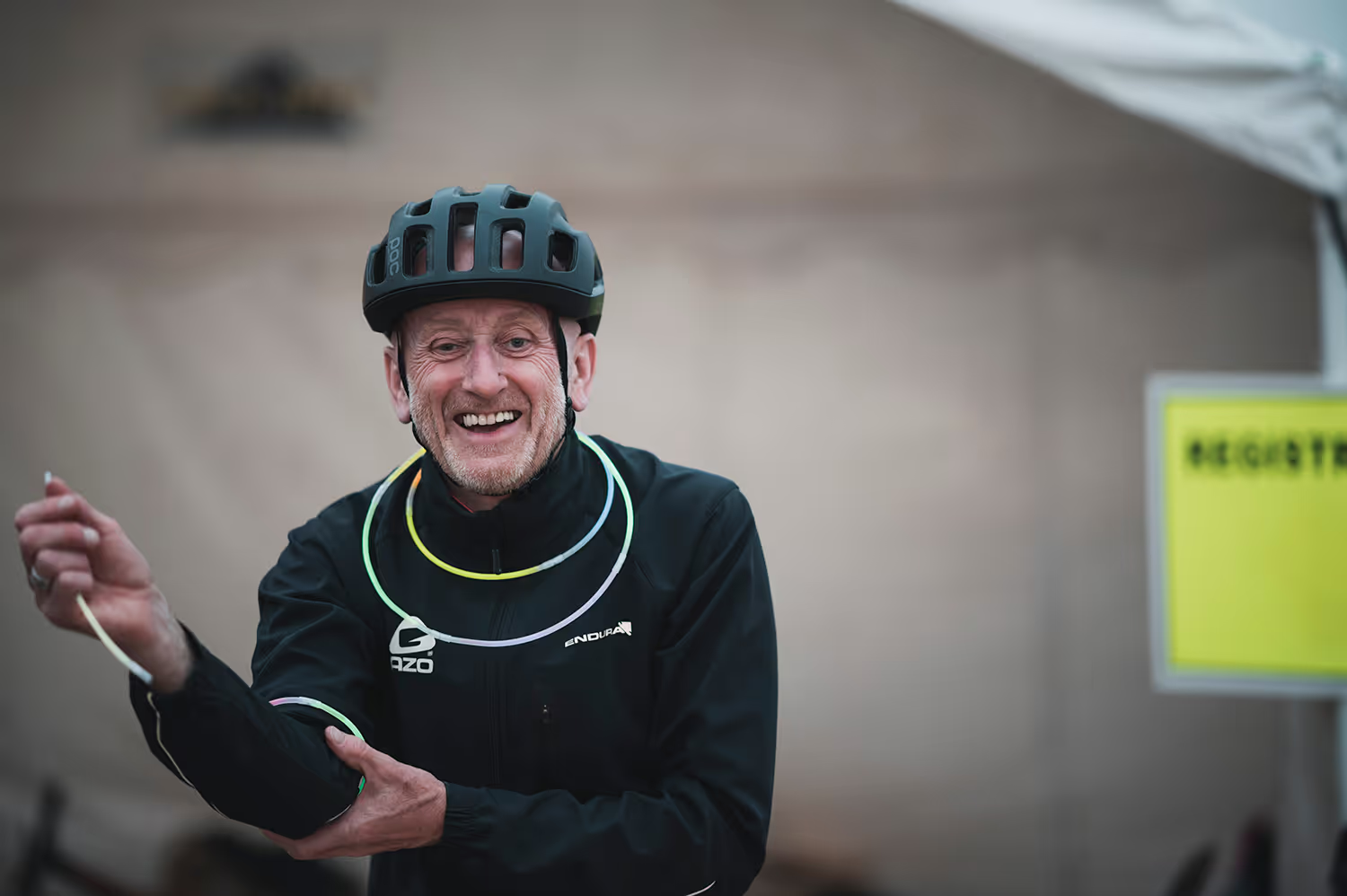
The operation, a robotic radical prostatectomy, took place at Addenbrooke’s Hospital in September. I was discharged the next day, catheter and all.
Recovery was challenging but steady. I focused on walking, rebuilding strength, and following guidance closely, even when my instincts told me to do more.
With support from the team at Deeka, I worked methodically through pre- and post-surgery fitness and recovery. By late autumn, I was back on the bike, carefully, gradually, and ahead of expectations.
The Final Result
Six weeks post-surgery, I returned for the PSA blood test that would indicate whether the operation had been successful.
When the surgeon told me my PSA level was 0.03, barely detectable, I was stunned.
From 21 to almost zero.
It is hard to describe what that moment feels like. Relief does not quite cover it. Gratitude comes closer.
Why I Am Sharing This
I have chosen to be open because our community, the Red On Sports and Gralloch community, is full of people like me: active, fit, and feeling healthy.
Prostate cancer does not care how strong you are, how much you train, or how good you feel.
Checking is simple. Early detection saves lives. And talking about it should not feel awkward or embarrassing.
If this story encourages you, or someone close to you, to take responsibility for that check, then sharing it has been worthwhile.
Look after yourselves. And each other.
Malcolm
If you would like to support prostate cancer research, you can donate to our Prostate Cancer UK fundraiser here.