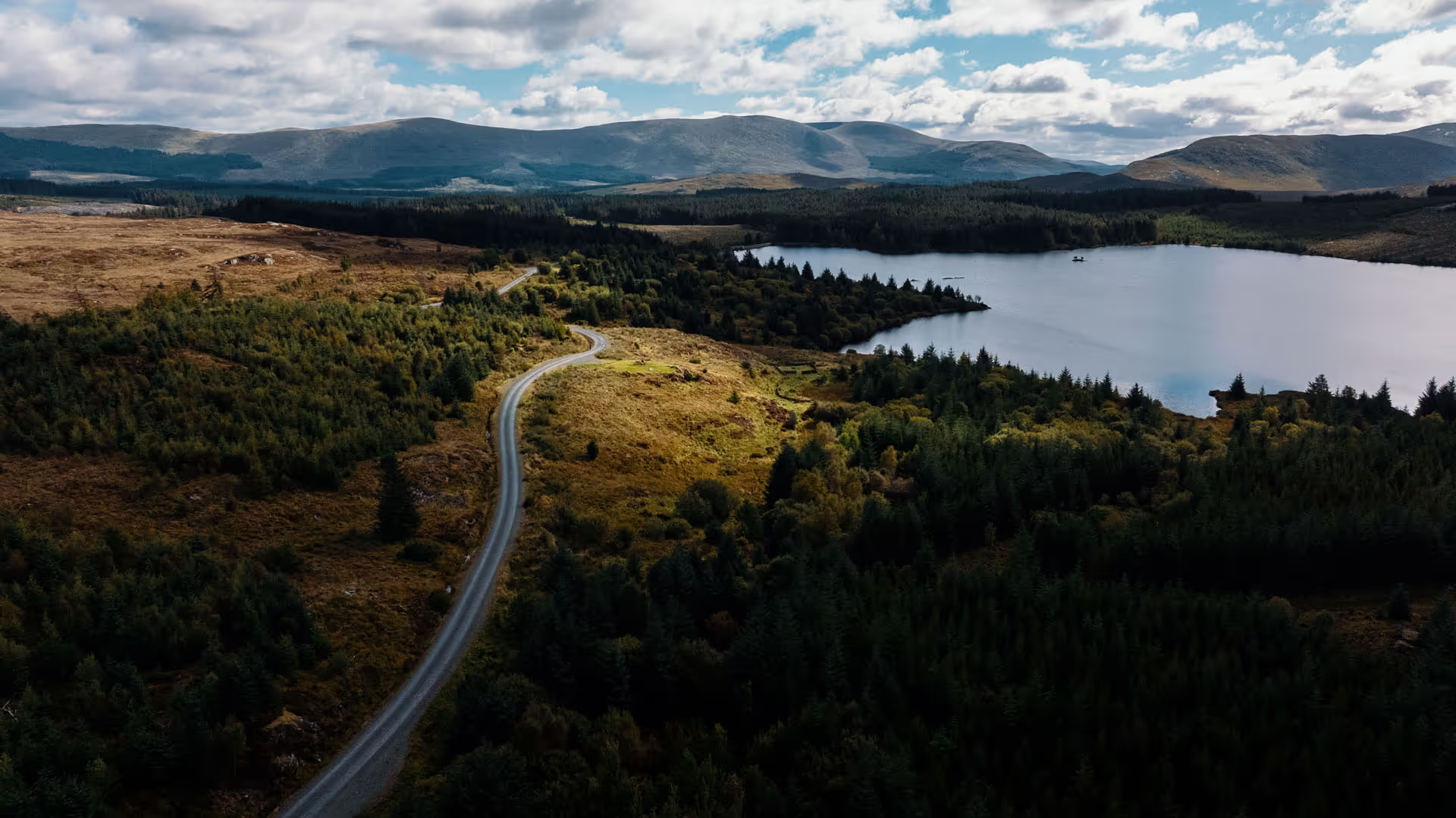
How to prepare for your first Ultra: lessons from The Gralloch Ultra webinar
If you’ve ever hovered over the Enter button for an ultra and felt your stomach flip, you’re not alone. Preparing for your first ultra can feel equal parts thrilling and terrifying, and that moment of commitment is often the biggest step of all.
To help demystify the process, we brought together a panel of riders and experts for a Gralloch Ultra webinar hosted by James McCallum. Joined by Malcolm Smith (co-founder of The Gralloch), ultra racer and coach Rich Rothwell, gravel ultra racer Zoe McIntosh, and Tom Hill from Restrap, the discussion dug into what The Gralloch Ultra is really about, and how to prepare for it with confidence. From mindset and training to fuelling, kit and night riding, their insights offer a grounded, honest guide to taking on your first 330 km gravel challenge.
You can also watch the full Gralloch Ultra webinar on demand if you’d like to hear the advice, stories and discussion in full — simply click here and settle in.
The Gralloch Ultra in one breath: big day, big ride, huge finish
The Gralloch Ultra is designed to be a proper ultra experience without needing a week off work and a full expedition kit.
- Distance: ~330 km
- Climbing: ~5,000 m
- Surface: 70%+ gravel
- Cut-off: 25 hours
- Location: Gatehouse of Fleet, Galloway, Scotland
It’s long enough to feel wild, serious and unforgettable, but deliberately shaped to welcome first-time ultra riders as well as experienced racers looking to sharpen their knives at the front.
And crucially: you’re not riding into the void. The event is semi-supported, with three feed zones, indoor rest spaces at feed zone 2 and 3, GPS tracking, medical cover, tech boxes, and rider recovery if you need to stop. More on that later.
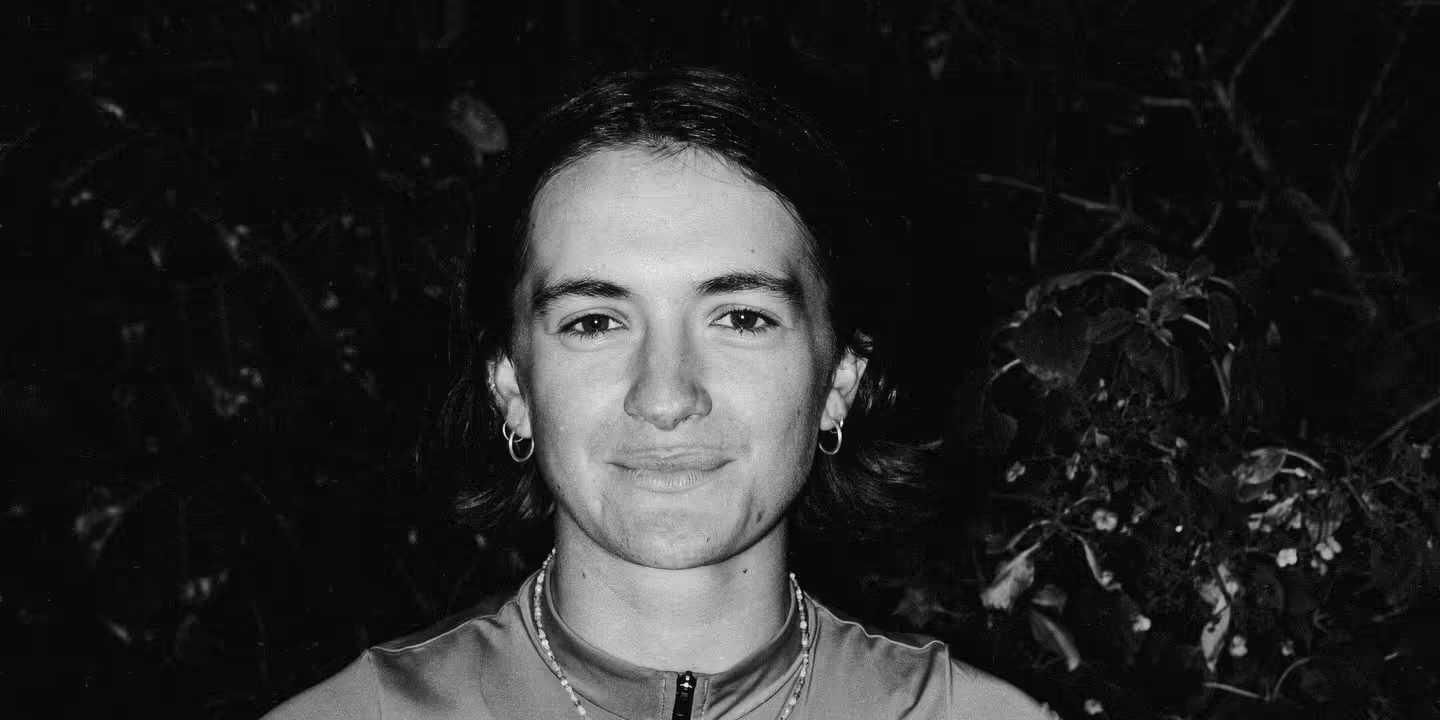
Nerves aren’t a problem. They’re the entry fee.
Zoe McIntosh put it perfectly: the most nerve-wracking part is often the initial sign-up. That moment where you declare, “Right. I’m doing this.” You’ve paid, it’s real, and now you have to show up.
Rich Rothwell added a brilliant reframe: whether you’re new or experienced, nerves are normal. If you’re not nervous, you might not care enough.
And here’s the best bit: those nerves don’t last.
Once the wheels roll, the body remembers what it can do. “I’m riding my bike,” Rich said. “I know I can ride my bike.” And the anxiety usually dissolves within minutes.
Takeaway: Don’t try to eliminate nerves. Expect them. Bring them with you. They’re a sign you’re doing something that matters.
The ultra mindset: don’t ride 330 km. Ride the next bit.
Every rider on the panel came back to the same strategy: break it down.
Not into heroic chunks. Into small, manageable ones:
- the next feed zone
- the next two climbs
- the next hour of steady progress
- the next “eat + drink” reminder on your head unit
One of the smartest tactics shared was using distance landmarks you already understand. If you regularly ride 50 miles, then:
- 50 miles = “That’s my Sunday ride”
- 100 miles = “I’ve done this before”
- 150 miles = “What’s another 50?”
It’s not that the ride becomes easier. It’s that your brain stops treating it like a single, impossible wall.
Takeaway: The finish line is motivating, but it’s the next marker that gets you there.
The community will carry you further than you think
Ultras look like solo events on paper, but the reality is the opposite.
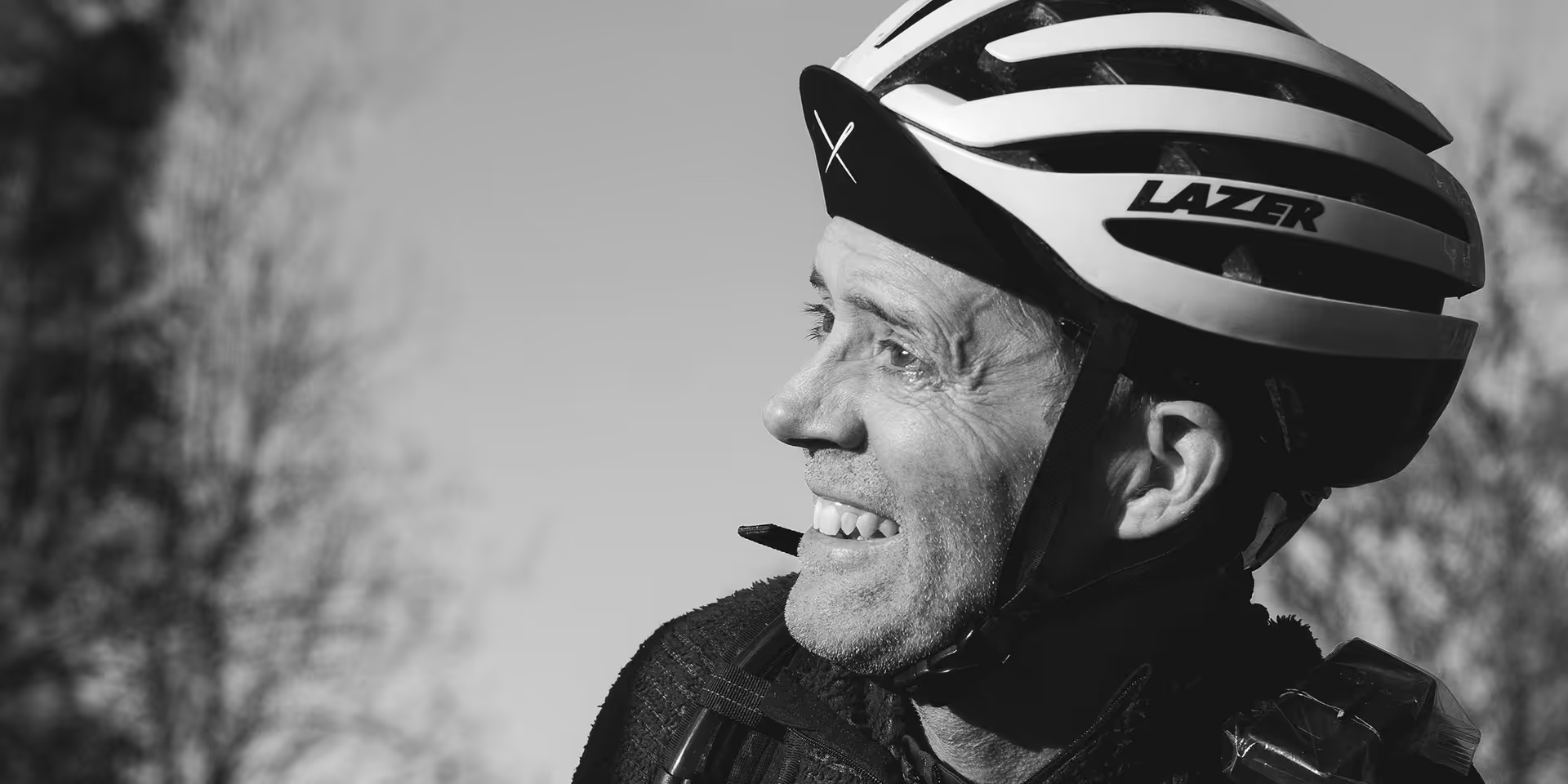
Tom Hill shared one of the most accurate ultra truths going: you might ride beside someone for ten minutes, but in those ten minutes you’ll share your deepest thoughts, your worst lows, and your best laughs. And you’ll finish with a new best mate.
Jimmy summed it up simply: you’re never really alone. Someone is always coming round the next corner.
Takeaway: Don’t be too proud to ride with someone for a while. A short conversation can reset your entire day.
Night riding: the magic… and the dip
If you’ve never ridden through the night, it’s hard to imagine how it feels. The panel described it as both visceral and oddly beautiful.
Tom highlighted that in May, darkness arrives late (a genuine bonus), and that the first hours after sunset often feel exciting. But he also offered the most useful practical insight: most riders will experience a low window somewhere between midnight and 4am.
That dip isn’t weakness. It’s biology.
Rich, on the other hand, loves the night. And he made a key point: you don’t “see nothing” at night. You just see differently. Your senses change. You hear more. The world feels bigger. The ride becomes an experience rather than a task list.
Takeaway: Plan for a night-time dip, and remember: the light always comes back.
Training for an ultra: consistency beats hero rides
Rich’s coaching perspective was refreshingly grounded: the old “just ride more” mindset isn’t always practical (especially in a northern winter). The goal is to build your aerobic engine over weeks and months through consistency, then layer in specificity closer to the event.
Key learnings from the training section:
Build fitness progressively
- Focus on steady aerobic development through winter
- Add longer rides during the specific build closer to event day
- Include sustained efforts (think tempo / sweet spot) for long climbs and rolling terrain
Spread volume through the week
Rather than smashing one enormous weekend ride and then being ruined for days, Rich encouraged riders to spread endurance across the week:
- shorter endurance rides mid-week
- back-to-back long rides at weekends
- plan “big blocks” around life commitments where possible
Strength work matters
Gravel riding is different to road riding. You hover, you absorb, you brace. Strength training helps you handle the repeated impacts and reduces fatigue.
Takeaway: Consistency + smart volume beats a handful of epic sufferfests.
Nutrition: eat early, eat often, eat what excites you
Zoe’s advice was the simplest and arguably the most important: eat, eat, eat.
She talked about how she used to underfuel and wonder why she felt wrecked afterwards. Once she started fuelling properly, it changed everything.
The panel reinforced the key ultra fuelling principles:
- start eating from the beginning
- don’t “get hungry” then try to catch up
- train your gut in training, not on race day
- bring a mix of sweet and savoury to avoid palate fatigue
- set an alert on your head unit: “eat + drink” every 20 minutes
And yes, the savoury chat got real:
- Rich: rice cakes, flatbread + cheese
- Tom: Babybel (not in any textbook, but undeniably elite)
- Zoe: flatbreads, PB&J, and whatever keeps you motivated
Takeaway: Your fuelling strategy should be practical, repeatable, and genuinely enjoyable.
Kit and set-up: don’t make race day your first test
Tom nailed a key principle: ultras are about doing new things, but there are certain things you don’t want to be new on event day.
That includes:
- using tubeless plugs for the first time
- finding out your multi-tool doesn’t fit your bolts
- testing a saddle pack that sways all over the shop
- realising you hate your gloves eight hours in
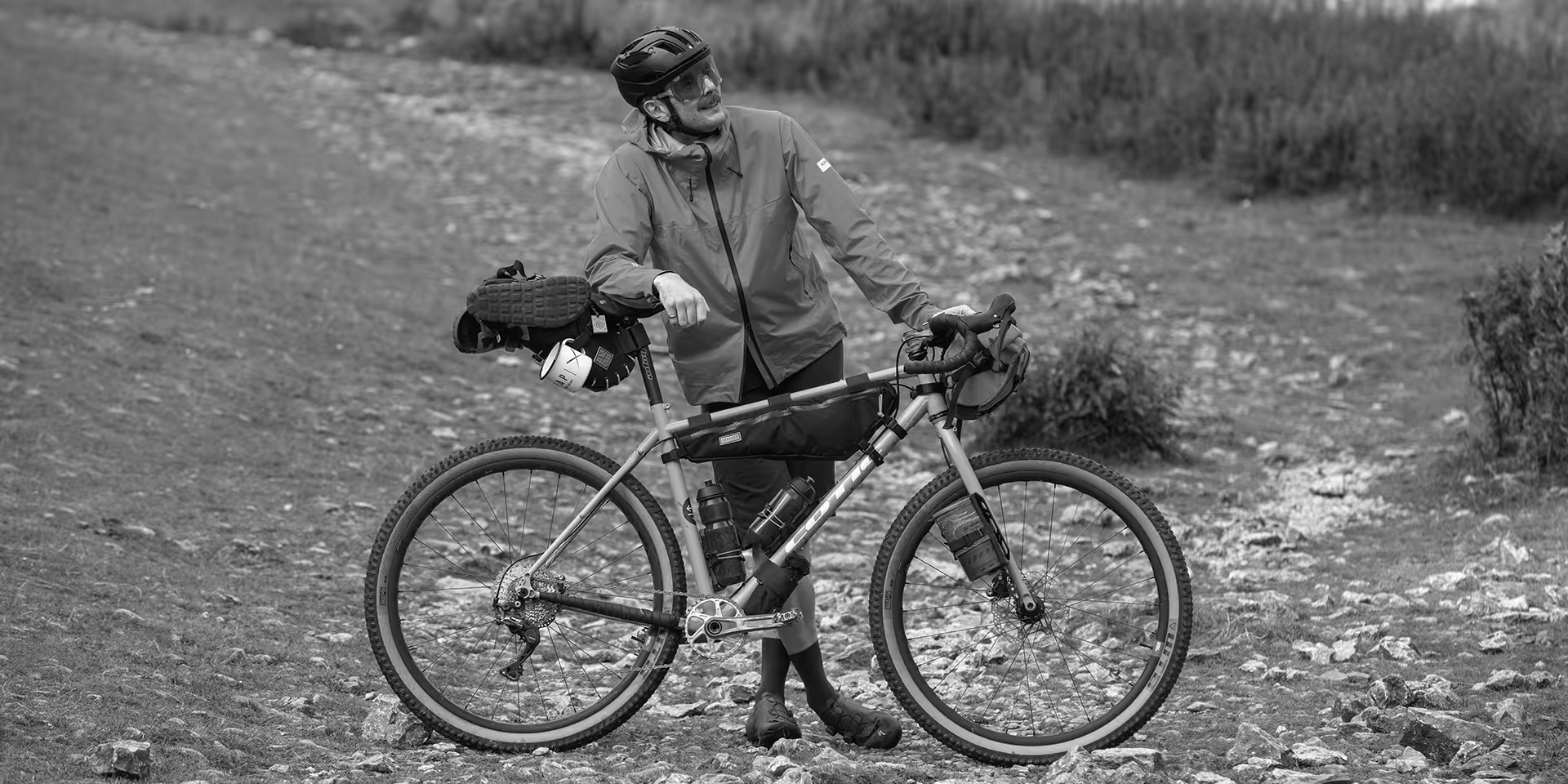
The advice from the panel was clear: try your bags, layers, tools and lighting setup now. Ride with your loaded bike. Practice grabbing food from your top tube bag. Learn how your bike handles with weight.
On gearing, the message was clear: build in a proper get-out-of-jail option. What feels manageable on a 100 km ride can become brutally hard at 2am when you’re cold, tired and underfuelled. Zoe and Tom both favour a 1x set-up, with something like a 40T chainring paired to a 50T sprocket giving a genuinely usable bail-out gear when the legs are fading. Rich, by contrast, said he’d opt for a double chainring for the broader range and finer cadence control. Whichever route you take, a 10T sprocket at the fast end of the cassette is a real advantage on the roughly 30% of non-gravel, rolling sections, where efficiency and momentum matter.
On tyres, the advice was simple: go as wide as your frame will comfortably allow. For most riders, 45–50 mm is the sweet spot, delivering comfort, control and reduced fatigue over long hours in the saddle. Robust tyres are strongly recommended, as the local gravel chippings are granite-based and can be sharp. Run plenty of sealant, carry plugs that are compatible with your chosen sealant, and prioritise reliability over marginal gains. Over an ultra distance, comfort and puncture resistance are speed.
Takeaway: Carrying a few hundred grams extra is irrelevant compared to not finishing.
Safety: you’re in the wild, but you’re not on your own
For first-time ultra riders, safety is often the biggest question. Malcolm Smith broke down the support structure clearly, and it should reassure anyone considering the step up.
Key points:
- GPS trackers monitored in an event control room
- if a tracker stops moving, the team investigates and can mobilise support
- a 24/7 emergency number (including WhatsApp) into event control
- medical teams and ambulances on deployment
- 4x4 rider recovery if you need to stop
- feed stations with people, tools, spares, and indoor shelter
- bag drop to feed zone 2 for extra kit if needed
It’s still an ultra. You still need to prepare properly. But you’re not being left to fend for yourself.
Takeaway: Safety starts with your preparation, and continues with a very real safety net around the route.
The story you’ll tell afterwards is the point
One of the most memorable moments of the webinar came from Zoe, sharing a story from her first ultra at The Land Between.
After an early crash, she laid down on the moors in her sleeping bag… and accidentally slept for eight hours because her phone charger failed. Not in the plan. Not exactly “race strategy”.
But it became her favourite memory.
She woke up refreshed, rode strongly, and later caught riders again. It was messy. It was human. It was ultra.
That’s the real heart of it: the ultra isn’t just about watts, kit lists and spreadsheets. It’s about doing something big enough to change the way you see yourself.
Ready to take your first step?
The Gralloch Ultra is more than a ride. It’s part of a full weekend in Gatehouse of Fleet, with an Event Village, talks, music, food, community, and a proper finish line welcome whether you roll in at golden hour or deep in the night.
If you’re ultra-curious, start where Zoe started: with that first brave click.
Learn more and register now
See you in Galloway.